Becoming NASSCO Certified
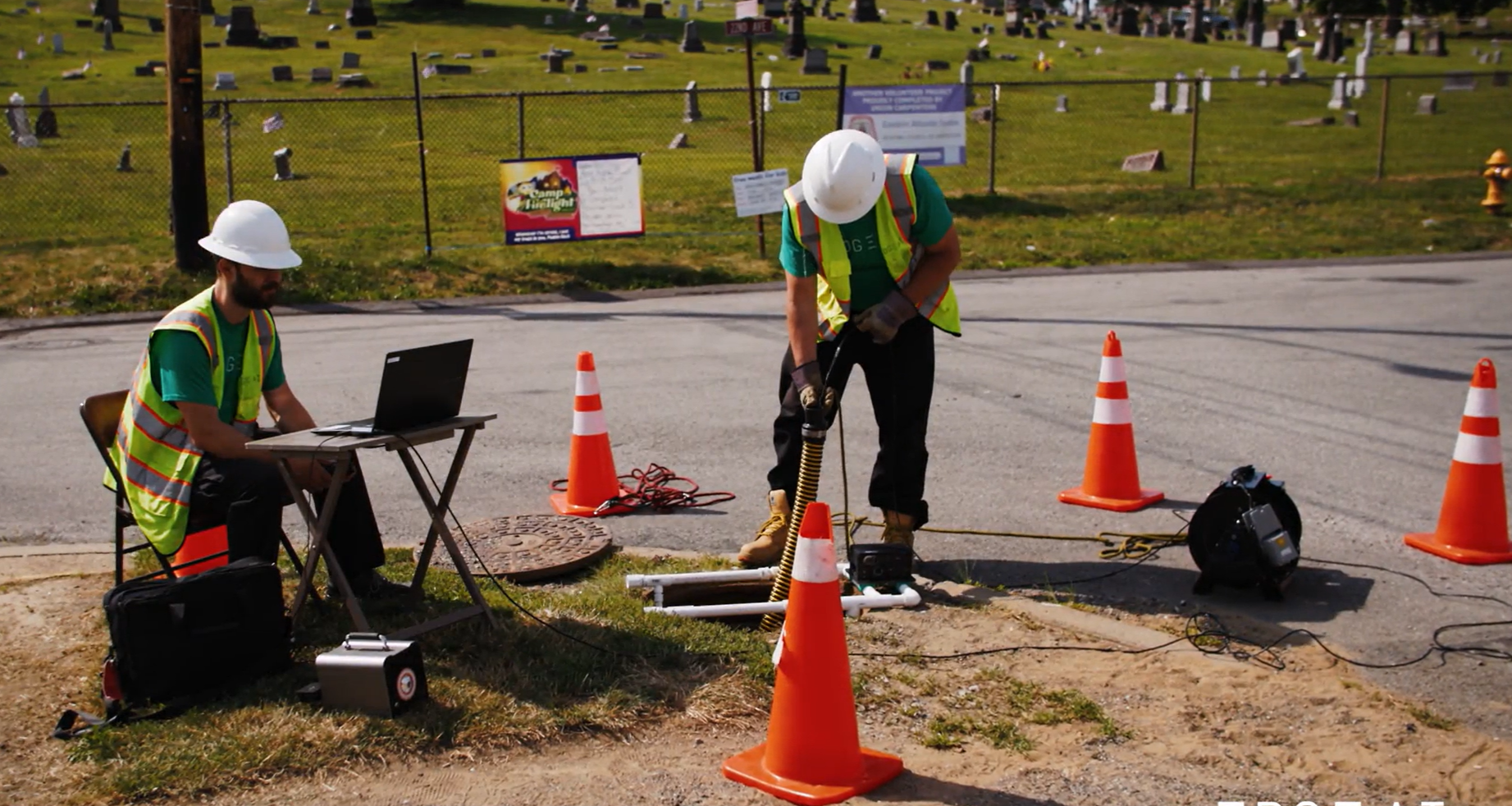
For those new to sewer inspections, the infrastructure and logistics of pipelines and manholes likely weren't on your radar before entering the industry. But as you may have discovered, sewer inspections involve capturing and conveying an enormous amount of information: details about the asset itself, geospatial data pinpointing its location, defects identified at various distances within the pipeline or manhole, and lots more. With so much crucial information being documented and analyzed later, it's essential that data is clear, accurately defined, and efficiently transmitted. This is part of the reason a standardized schema has been developed, to answer key questions like: What exactly does a sewer inspection consist of? What information is relevant, and who needs it? How can we communicate this information more effectively and consistently?
This is where NASSCO comes in. NASSCO (the National Association of Sewer Service Companies) is a non-profit organization dedicated to setting industry standards for the assessment and rehabilitation of underground infrastructure. They develop standardized protocols, certification programs, and best practices that ensure consistency and quality across the sewer inspection industry. As a company whose software handles the ingestion, modification, transformation, and delivery of pipeline and manhole inspection data, you can see why NASSCO standards are directly relevant to our work. NASSCO offers a rigorous certification testing process for software platforms like ours to ensure compliance with industry standards. In 2025, we decided to pursue this certification.
.png)
NASSCO's software certification process is thorough and demanding. It involves extensive documentation, inspection validation software, and multiple live testing sessions, each spanning several hours, where our team demonstrated data entry capabilities and system compliance in real time. Between the hundreds of inspection header fields, inspection header codes, condition codes, and the many other components of NASSCO's schema, it's safe to say that countless edge cases had to be covered. Can a manhole cover be both sound and cracked? To what level of accuracy does cover bearing surface width need to be measured? Is wall material required for a level one inspection? By the end of the certification process, I had inadvertently become an expert in NASSCO specifications.
The process was long and certainly challenging from an engineering perspective, but the result was well worth it. We can now fully ensure import and export compliance with other NASSCO-certified software, enabling seamless data transfer and allowing users to take a hands-off approach. Our software knows the rules, which means users don't need to be NASSCO experts themselves. The system will ensure compliance automatically. Becoming NASSCO certified for PACP and MACP inspections in versions 7 and 8 was a huge hump for us to get over as a team, and we’re happy about what it means for our software and Pipe Dream as a whole. Of course, once version 9 is released by NASSCO, this process will begin again - but this time, we’ll be ready for everything that entails!
.png)
-Jacob Salmon, Software Engineer at Edge AI Solutions, Inc.

.avif)