My Experience Entering the Pipeline Assessment Industry
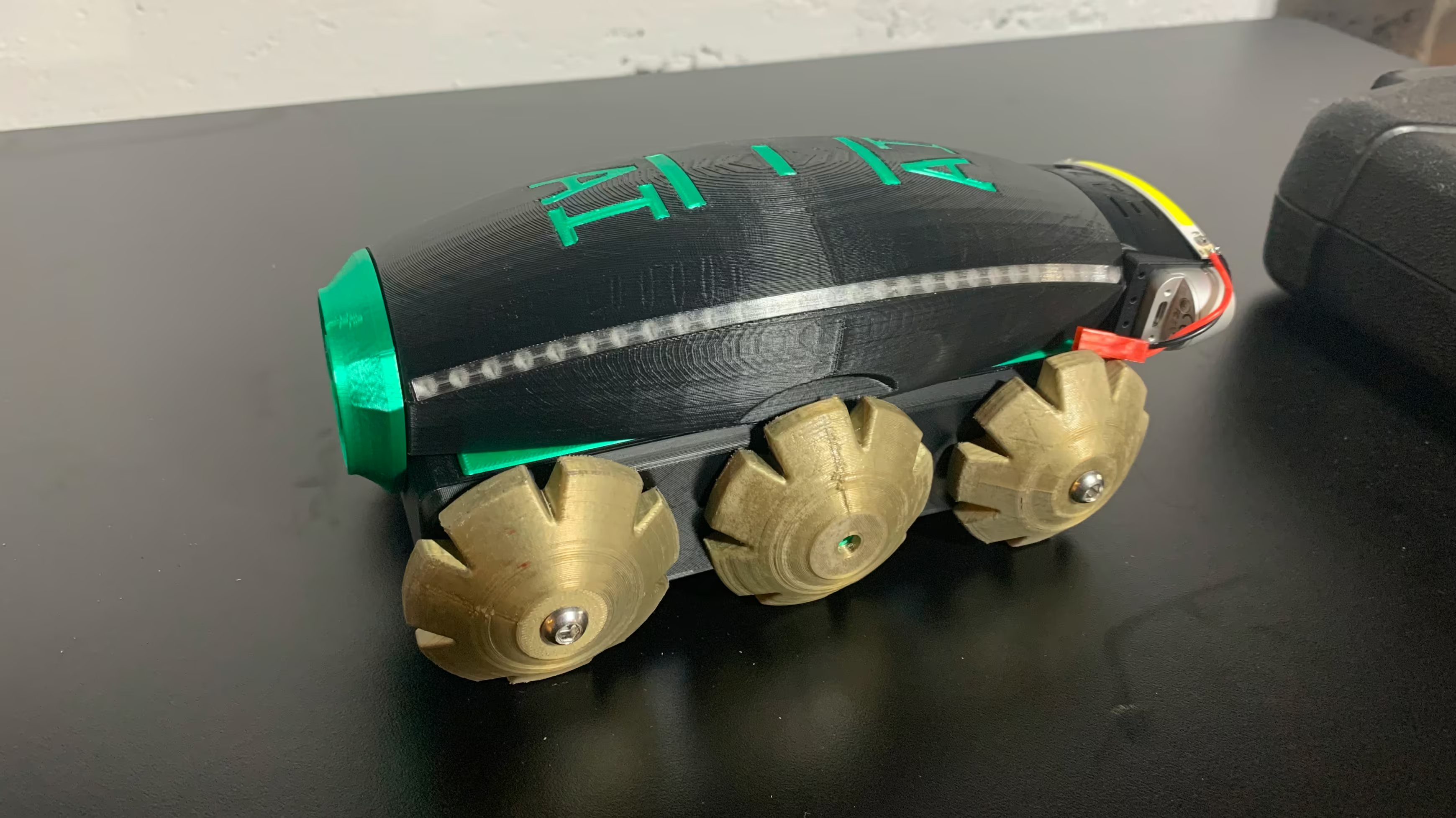
I’ve been at Edge AI full time for over two years now, and I have to say, I’ve definitely been put to the test. I started almost 6 years ago and still remember our first shot at a crawler in a small cramped office, trying to simulate a sewer inspection with an iphone camera, RC car, and a handful of old PVC pipes. Needless to say, it did not go well. I still have the first picture I took on my phone.
We had no idea what we were getting ourselves into, but when my father and I become determined, there is little that can stop our progress. I did internships on and off going back and forth from our home in Canada and our office in Pittsburgh, and each time I came back, it got a little bit larger, and there were a few more people involved, almost like a time skip. I think I also still have pictures of helping to transport old pipes we found in a scrapyard to the office basement for our tests. At the time we thought all pipes were only either PVC, VCP, or concrete, and the 5 foot section of 12 inch VCP that I carried by myself was the heaviest thing I’ve ever had to move, despite 8 years in the moving industry.
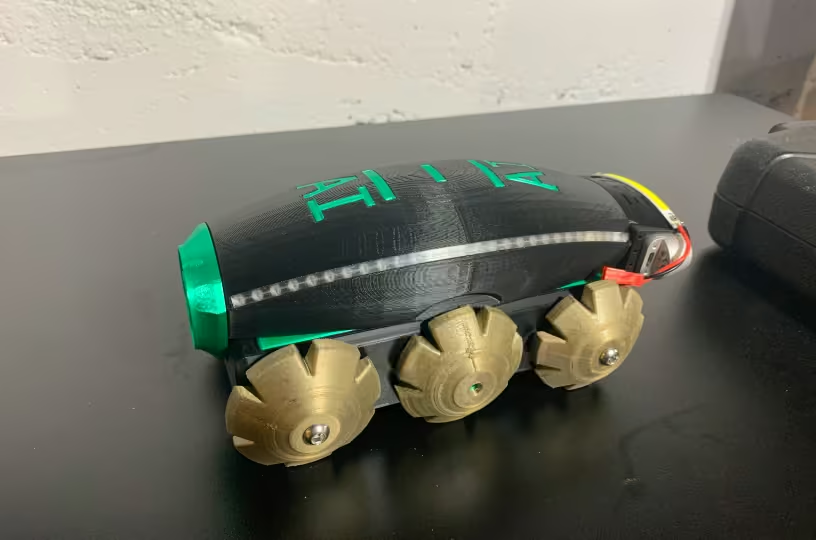
A few years ago we had our first working prototype sewer inspection robot, which we called the beta bot, and it could only go into 8-12 inch pipe at the time. Of course now we do 6-48 but we were ecstatic that it could go into even 3 different sizes at the time. It wasn’t until a year later when I lifted my first competitor robot at a trade show (and subsequently got yelled at for touching things I wasn’t supposed to) that I realized how light our camera system was. We thought this was standard, so you can imagine our faces when our clients pulled out 100+ lbs crawlers with hooks and winches and cranes.
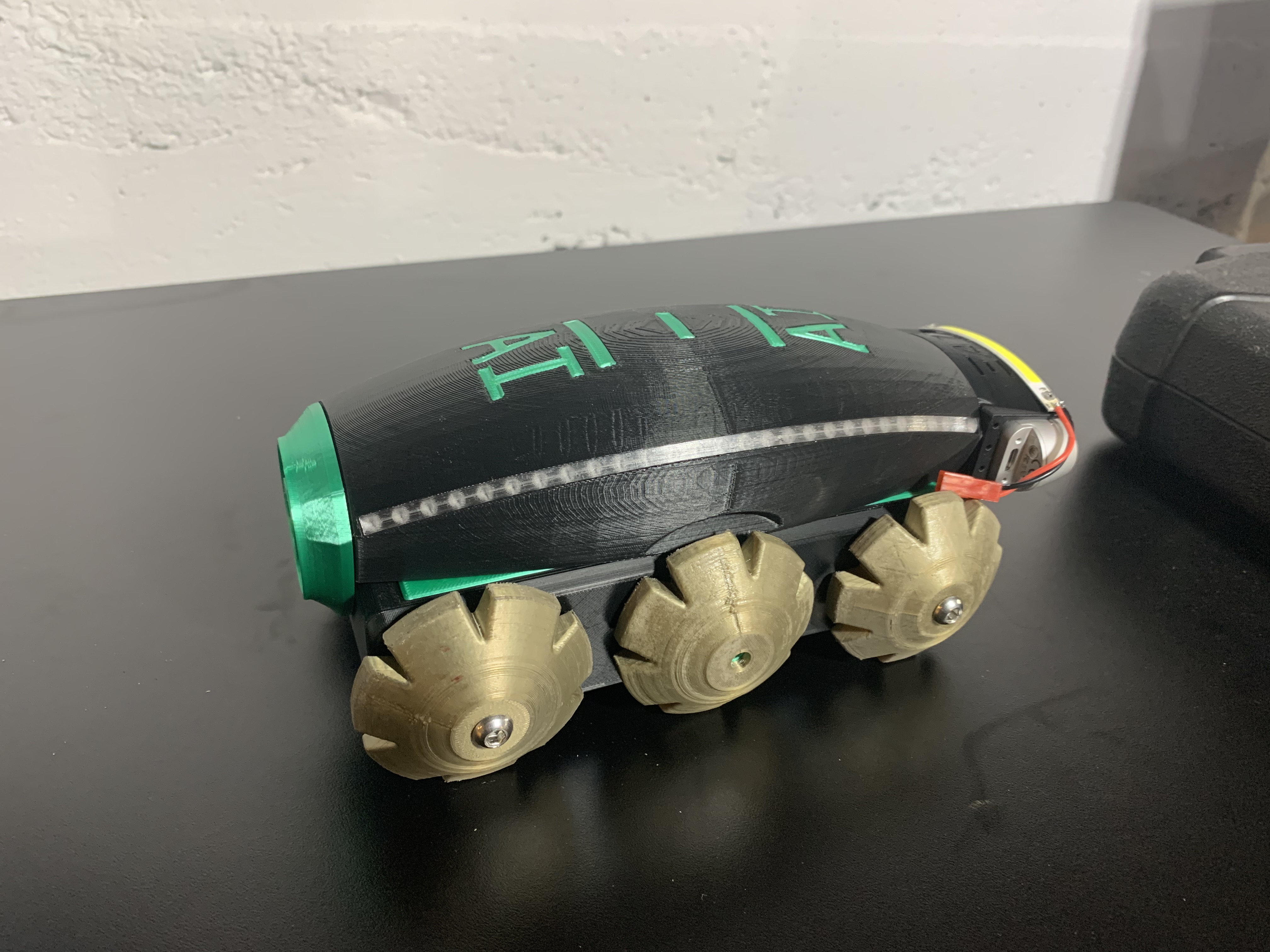
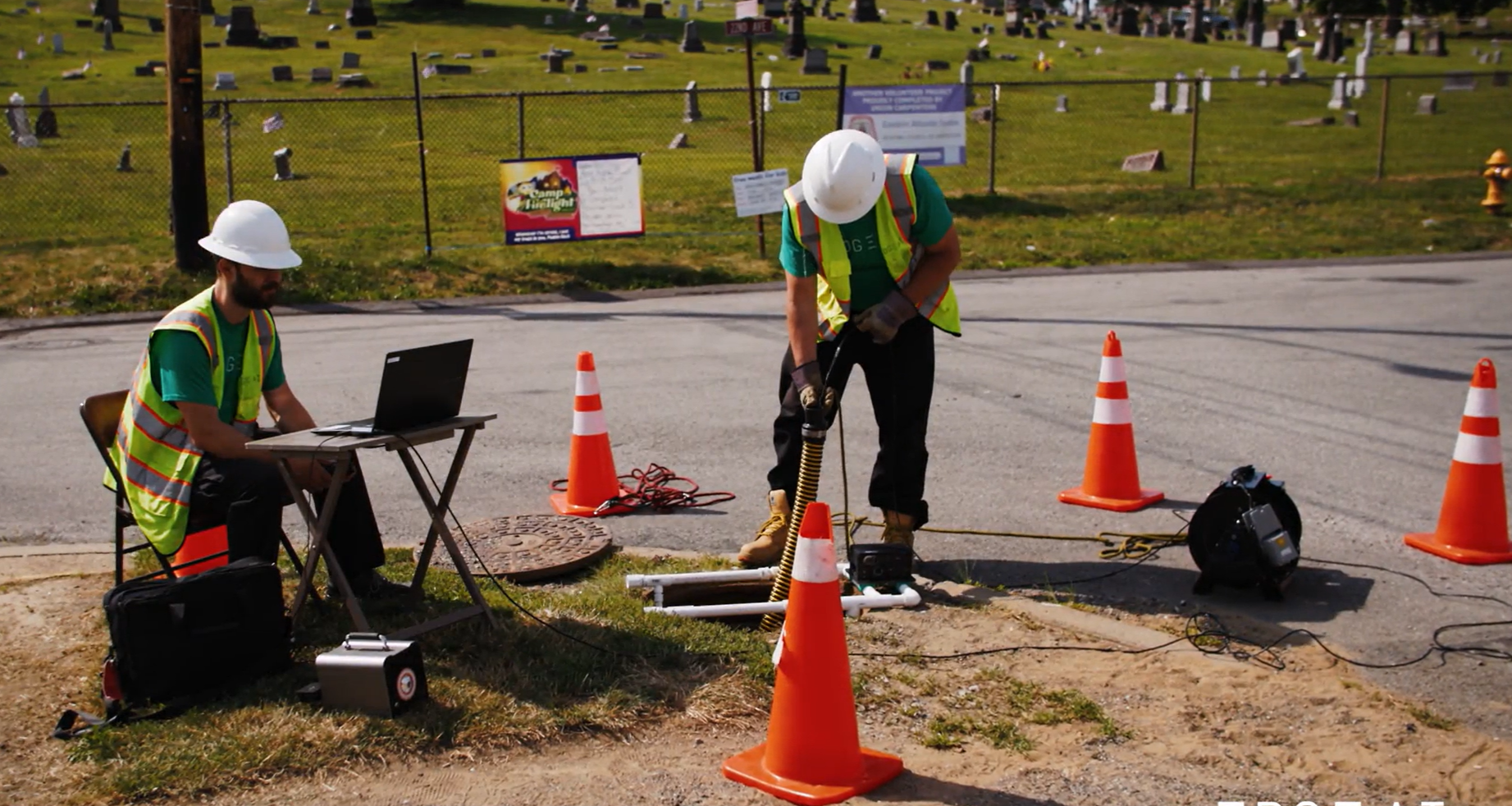
When I started full time, and we had our official Pipe Dream model that is standard today (of course by the time we release this there will likely be an even newer model that does ovality measurements), I was immediately thrown into the field. Even though it was supposed to be temporary, I ended up working with field crews for the next 2 years building a system to manage our PACP contracts from scratch. Being new to the wastewater and stormwater inspection industry, I had no idea what standard procedures were, and as my uncle says, I really had to learn the “lingo”. We had no idea what PACP or MACP was at the time, or NASSCO, or anything like that, and had never even seen a jetter truck. But we’ve come a long way in such a short time, and now I can confidently say that when I step out in the field and demonstrate our equipment, we have the Edge.
The biggest learning curve was definitely driving the crawler. As soon as you enter that pipe, the risk skyrockets. The first thing is the cable. You have to make sure that it doesn’t get snagged on any cracks, fractures, shark fins, or other deformations in the pipe, and as the operator you are 100% conscious of this every foot of the way. When you pass obstacles, you’re always checking your back camera (if you have one) to see if it gets caught. The next thing is flipping. You’re always conscious of the angle as you mount the root balls on the sides with only one set of wheels. Every crawler has its own tipping angle and with ours it heavily depends on wheel configuration. If you flip with ours, luckily you can just jet it out, but with other crawlers you may not be so lucky, especially if you’ve gone through an area with damage. The next thing is the visuals. You always have to make sure the picture is clear enough to code, whether that means restarting 17 times, you do what you must to get the best picture. Again ours has a dual 360 degree camera coverage, but of course you still need to be able to see where you’re going. Even if you can get it in the back camera, the front is still what prevents you from falling into a hole or off a drop. Which leads me to the last thing, which is watching where you’re going. I’ve made the mistake of falling through a vertical lateral connection because the slope increased by 500%. We had to drive it to the next manhole and pull it out, disconnect it, and then pull the cable back. I can’t believe we got out of that mess. You never want to end up going through an inside drop, outside drop, or especially either of those into a buried manhole.
From my experience, I’ve found that the data in this industry gets very complicated as well. Verifying data and tracking it has been one of our main concerns, and most of our drive to create our portal which can filter by pipe size, pipe material, or other NASSCO fields, is because of the struggles we had during our first jobs with the neighboring municipality. Our end goal is to integrate everything from robot to PACP/MACP to automatic GIS integration. It would be cool if we could do self-driven AI as well, but I think that will be in the far future. I’d be shocked if it isn’t done one day though, as the AI advancements have been pretty crazy these days.
-Julian Dubeau, Robotics Engineer at Edge AI Solutions, Inc.

.avif)