Frustrations and Solutions for Sewer Inspection Systems
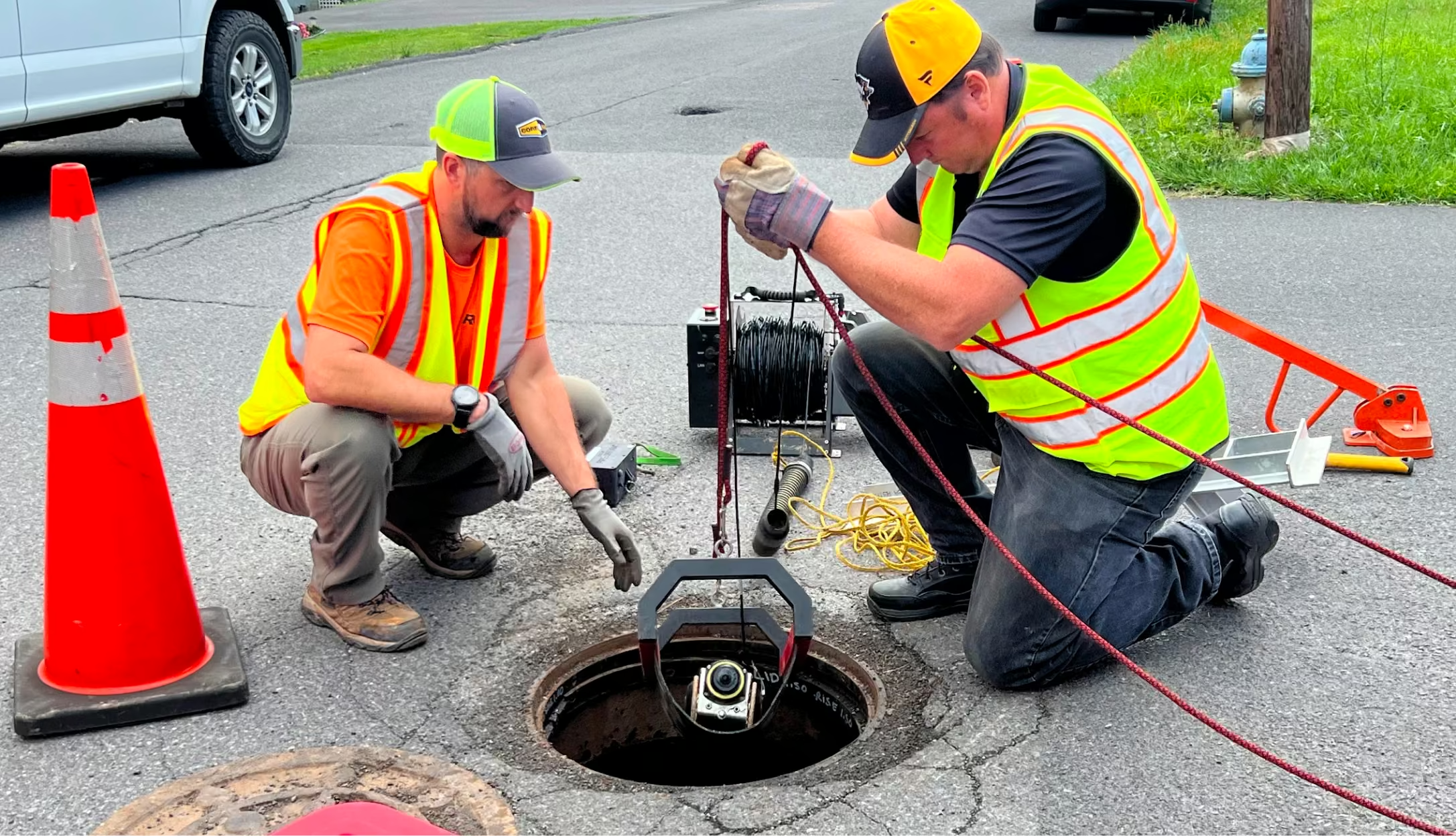
Sewer inspection systems are critical and essential components of the infrastructure upon which modern society depends. Cities, municipalities, engineering firms, pipeline service and manufacturing companies rely on these systems to ensure that sewer lines are properly constructed, inspected, maintained, and repaired.
Since the introduction of Closed-Circuit Television (CCTV) technology for sewer inspection in the 1960s and 1970s, over a half-century of technological advancement has made modern sewer inspection systems significantly more powerful and capable. They operate faster, inspect longer distances, and are smarter, often incorporating robotics and contemporary sensors. Nevertheless, conventional inspection solutions have long been characterized as slow, costly, unreliable, and cumbersome.

Following are the top frustrations commonly encountered with traditional sewer inspection systems:
- Frequent Equipment Malfunction and Associated Downtime
- Recurring failure of critical equipment, most notably the crawlers/cameras and their associated cable reels, is a major problem.
- Extended downtime, often weeks or months wait time for repairs or proprietary replacement parts, severely impacts operations and leads to significant financial losses.
- Unreliable Performance
- Sewer inspection equipment frequently fails in harsh environments (e.g., cold/freezing, moisture/water ingress, corrosive conditions, or abrasive debris) due to component sensitivity.
- Legacy network technologies utilized by many sewer inspection systems introduce unstable communication links between system components, resulting in lagging video streams, frequent connection interruptions, and inadequate camera control.
- Low Portability and Cumbersome Setup
- Current sewer inspection systems are heavy, bulky, and cumbersome, making transport and setup difficult. They are also unable to inspect tight or hard-to-reach spaces, especially those without easy vehicle access, such as narrow easements.
- Complicated multi-conductor cables and non-intuitive control units severely slow down the inspection process. Poorly designed control interfaces with unreliable components force technicians to focus on equipment troubleshooting rather than the inspection itself.
- Poor Image Quality
- Blurry or grainy footage is a persistent problem, especially when inspecting pipes filled with dirty water or sediment, or operating in low-light conditions.
- Cameras cannot effectively handle the harsh elements found in sewer lines, including highly corrosive wastewater, thick grease deposits, abrasive debris buildup (sand, gravel, silt), and aggressive chemical agents.
- Limited Software Compatibility
- Software compatibility and integration issues are a constant challenge for sewer inspectors. Inspection software updates often fail to integrate seamlessly with existing reporting tools, asset management systems, or older hardware.
- Proprietary data formats in many sewer inspection systems restrict the sharing of inspection footage and reports with clients, partners, or contractors who often lack the specialized software required for viewing.
- Lack of Support or Training
- Post-purchase support and onboarding are often minimal or nonexistent. This lack of adequate training leaves technicians struggling with complex equipment and proprietary software, hindering efficient workflow integration. Consequently, teams face slow return on investment (ROI) and unnecessary downtime as they learn through trial and error.
- Unresponsive or poor customer service and technical support cripple maintenance schedules. Field issues (hardware, software, data) lead to long waits, forcing inspection cancellations and preventing compliance with regulatory deadlines or contracts.
The persistent, compounding issues plaguing conventional sewer inspection systems directly translate into costly project delays, severely hinder the productivity of inspection crews, and slow down the process of making critical, time-sensitive repair and maintenance decisions. The inability to quickly and accurately assess pipe conditions can lead to escalating infrastructure failures and increased public health risks.
Recognizing this critical gap in municipal and industrial infrastructure management, the Pipe Dream® Sewer Inspection Robotics System by Edge AI Solutions, Inc. was specifically engineered. It was developed not merely as a replacement, but as a comprehensive, technologically revolutionary solution designed to address and overcome every one of the aforementioned systemic deficiencies, thereby streamlining the inspection process and providing reliable, actionable data.
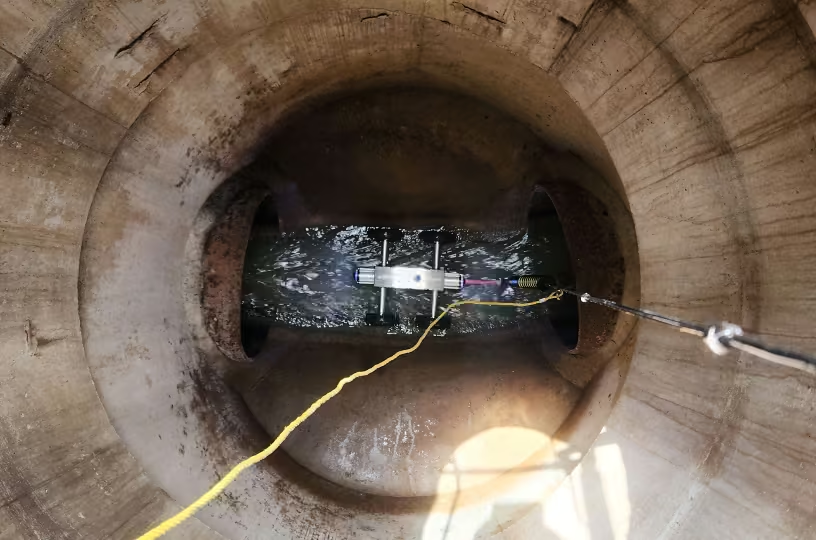
Let’s look at the solutions the Pipe Dream® System brings to the market.
- Durability & Reliability
- Rugged yet lightweight, IP68 waterproof industrial designs that consistently hold up under daily use.
- Utilizes state-of-the-art video processing to provide digital Pan-Tilt-Zoom (PTZ), eliminating frequently broken mechanical PTZ mechanisms.
- Kevlar-reinforced, flexible Pipe Trax fiber cable offers 400 lbf of tensile strength.
- It is inherently safe as no line power is used.
- Provides high bandwidth to support dual 4k resolution live video streams.
- Includes built-in electronic markers for reliable & high-precision odometry.
- Single Pass 4K Video Inspection
- 360° panoramic capture ensures nothing is missed.
- Features dual camera (up to 4K) redundancy combined with powerful 1200 lumens LED lighting arrays.
- Offers live and post-inspection 360° Pan-Tile-Zoom (PTZ) capability.
- Multi-use capability: PACP/MACP/MSI compliant inspection in a single pass.
- Highly Portable: No Truck Required
- Quick, hand-deployable, and intuitive operation.
- Portable, with a total system weight of only 40 lbs. 1000 ft tether weighs only 18 lbs.
- Full-day battery life means no generator is needed.
- Easy to deploy in hard-to-reach locations, such as easements.
- Comprehensive Software, Data & Reporting Solution
- Streamlined PACP™/MACP™/MSI Coding.
- Easy export to PDF, video, or cloud platforms.
- NASSCO certified options (Live coding, Post-inspection coding + editing overlays, or coding by Edge AI Solutions).
- Works directly with other NASSCO certified coding platforms.
- Control software is included at no extra cost.
- Seamless integration with GIS and asset management systems.
- Cloud-Based Customer Portal.
- Web-based inspection sharing, data management, queries, and statistics. For example, showing all grade 4 or 5 defects can be done easily.
- 24/7 access to reports and videos viewed directly on the web.
- Direct upload from the Robot to a secure cloud server.
- Strong ROI
- Fast inspections via single-pass data capture and post-inspection coding lead to more completed jobs.
- Reliable results mean fewer re-inspections or disputes.
- Flexible pricing scheme to fit different budgets. Customers can choose between a straight purchase or a No Capital Expenditure (CapEx) subscription model.
- Responsive Customer Support
- Downtime is drastically reduced to negligible level through:
- Equipment redundancy: Every subscription comes with two robots.
- Quick turnaround for service or parts: Replacements ship the next day.
- Built-in comprehensive warranty.
- Accessible technical training and online knowledge base resources in the customer Portal.
- Comprehensive, multi-session training program, tailored to different user levels (operators, managers, IT staff).
- Custom system integration capabilities.
Contact Edge AI Solutions, Inc. to experience the Pipe Dream® differences today!
-Gavin Bai, Director of Engineering at Edge AI Solutions, Inc.

.avif)